

Control of durchwuchskartoffeln
Development of a robotic system for the targeted detection and mechanical removal of durchwuchskartoffeln – without the use of chemical plant protection products.
Funding Notice
A project funded under the CAP Strategic Plan Germany 2023–2027 in the Free State of Bavaria. Supported by the European Innovation Partnership (EIP-Agri).
01
Project Goal
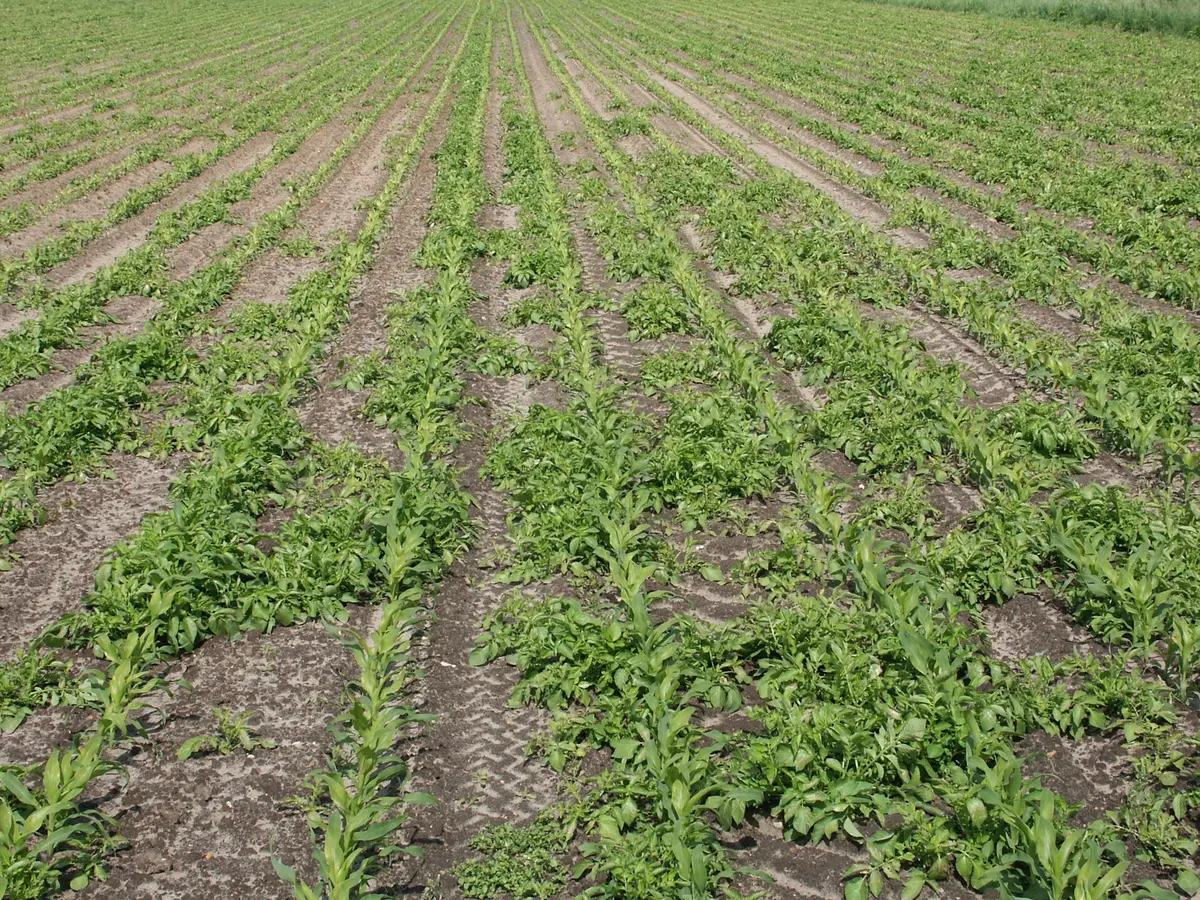
Durchwuchskartoffeln appear as unwanted plants in subsequent crops and represent a growing challenge in arable farming. They compete with crops for resources and can promote the spread of diseases and pests.
The aim of the project is to develop a robotic system that detects these plants in a targeted way and removes them mechanically – without the use of chemical plant protection products.
02
Initial Situation
After potato harvesting, tubers often remain in the soil and sprout again in the following years. These so-called volunteer potatoes:
Reduce yields in subsequent crops
Complicate crop rotations
Increase phytosanitary risks
Are difficult to fully control
Existing methods often focus on above-ground plant parts and insufficiently reach the tubers located in the soil.
03
Approach
Within the project, an innovative system is being developed that is specifically designed for sustainable control in the soil:
AI-based detection of individual plants
Precise positioning of a mechanical tool
Targeted intervention in the soil to damage the tubers
Combination of automated and supervised control
The focus is on interrupting the growth cycle as completely as possible by treating the mother tubers in the soil.
04
Expected Results
The goal is to develop a practical system that can be used under real conditions.
In particular, the following outcomes are expected:
A significant reduction in the use of herbicides
More effective control through intervention in the soil
Improved field hygiene and plant health
Relief for agricultural operations
The system is intended to be usable in both conventional and organic farming and to open new possibilities for sustainable production systems.
05
Project Activities
The project includes several key development steps:
Development of an AI system for plant detection
Development of mechanical tools for tuber treatment
Design of an all-terrain carrier vehicle
Integration of control and safety functions
Execution of extensive field tests
A special focus is placed on the combination of digitalization and mechanical processing.
06