
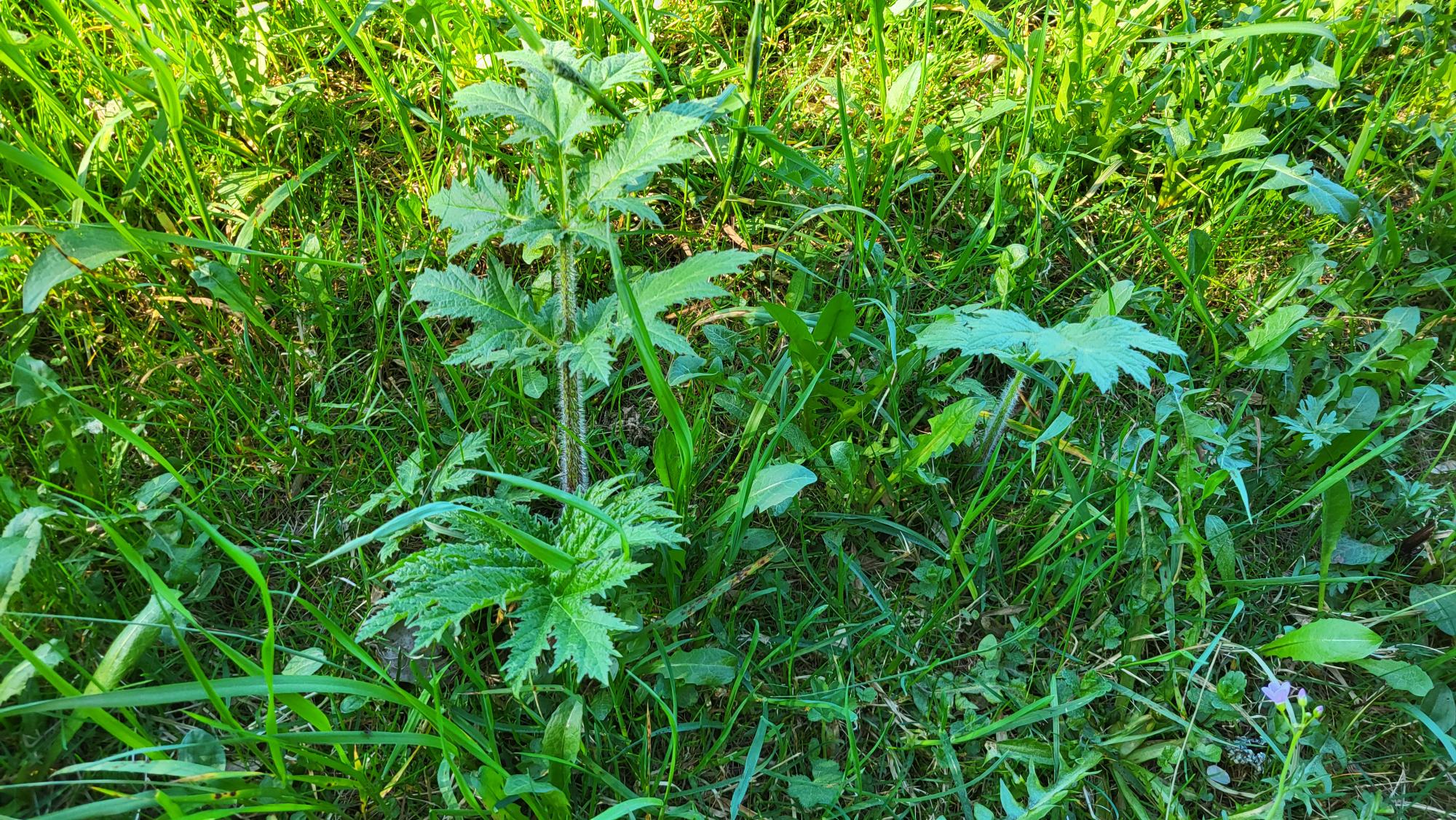
NeoBot – (Semi-)autonomous control of invasive plants
Development of an all-terrain robot for the mechanical, herbicide-free control of invasive plant species – safe, practical, and environmentally friendly.
Funding Notice
A project funded under the CAP Strategic Plan Germany 2023–2027 in the Free State of Bavaria. Supported by the European Innovation Partnership (EIP-Agri).
01
Project Goal
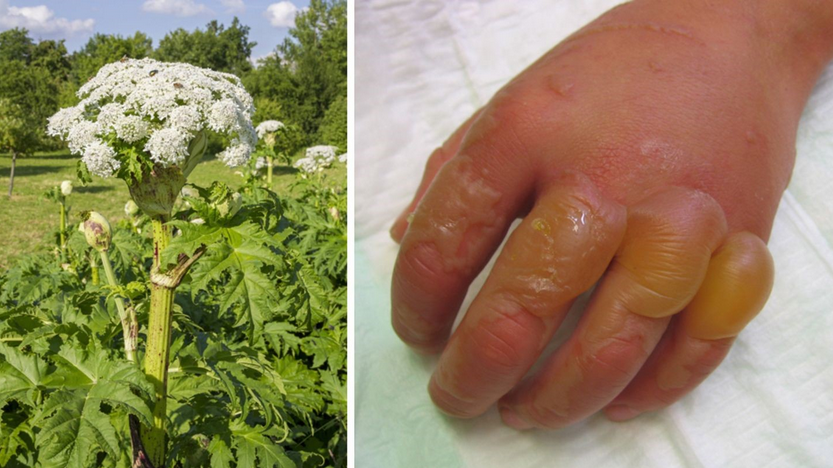
Invasive plant species such as giant hogweed pose an increasing challenge for agriculture, the environment, and public safety. They displace native species, are difficult to access, and can cause health damage upon contact.
The goal of the NeoBot project is to develop an all-terrain robot that removes these plants mechanically and without the use of herbicides. The focus is on a practical, safe, and environmentally friendly solution.
02
Initial Situation
The control of invasive neophytes is currently carried out mainly:
Manually (labor-intensive and risky)
Chemically (environmentally critical)
Or with equipment that is difficult to deploy
Especially in hard-to-reach terrain – e.g., slopes, forest edges, or near water bodies – existing solutions are only of limited use.
This is where the NeoBot project comes in.
03
Approach
Within the project, an innovative system is being developed that combines the following features:
Operation in rough terrain
Mechanical, herbicide-free control
Combination of manual and semi-autonomous control
Intelligent detection of relevant plants
The system is modular and can potentially be adapted for additional applications in the future.
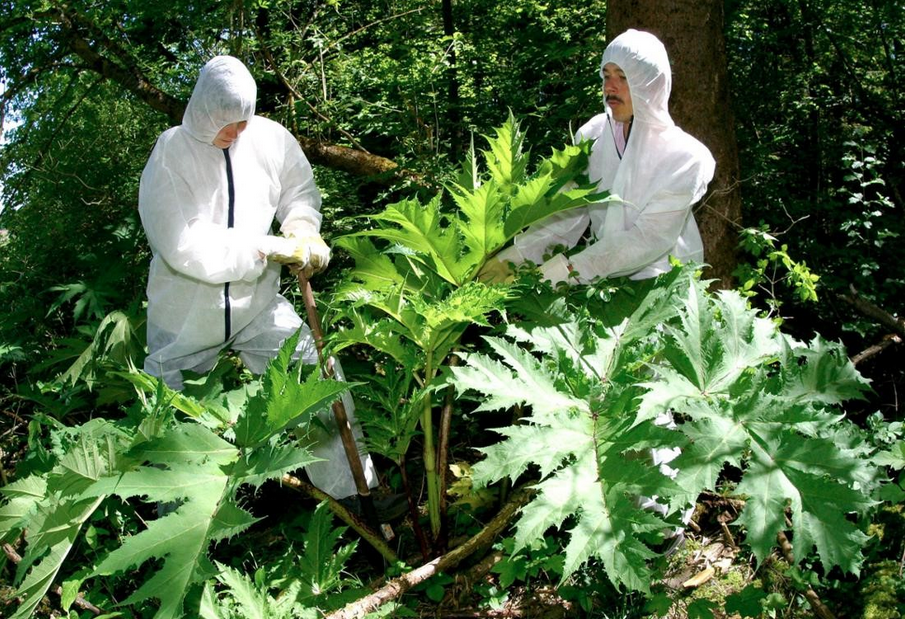
Figure 2: When removing giant hogweed, wearing protective clothing is mandatory. Otherwise, skin burns may occur.
Source: Merkur04
Expected Results
The project aims to develop a functional demonstrator that can be used under real conditions.
In particular, the following outcomes are expected:
A significant reduction in manual labor effort
Improved occupational safety
An environmentally friendly alternative to chemical methods
New approaches for applying modern technologies in landscape management
In the long term, the solution aims to promote biodiversity and open new perspectives for the practical use of automated systems.
05
Project Activities
The project includes several coordinated work steps:
Development and integration of key system components
Adaptation to different operating conditions
Establishment of safe and reliable operation
Conducting laboratory and field tests
Accompanying communication and knowledge transfer
A special focus is placed on practical testing under real conditions.
06
Milestones
These steps form the foundation for potential future real-world application.
2026
Demonstrator under controlled conditions
2027